

Revitalizing a Neglected Relic into a Community Resource
Evans Fintube Redevelopment

Selected RFP Proposal for Historic Preservation & Mixed Use Redevelopment
Tulsa, OK | 2020 - 2022
Developed as Part of Team Alchemy Development Team
Partnering with some of Tulsa’s most passionate and driven developers and design professionals as Team Alchemy, we were honored to be part of the efforts to revitalize the historic Evans Fintube site. A competitive RFP process resulted in a strong public preference for our proposal, which prioritized the needs and desires of Greenwood’s Black community through a collaborative and empathetic engagement process. The resulting program provided residents with a sense of ownership and aimed to holistically support their needs in terms of community spaces, affordable housing, entrepreneurship opportunities, and more.
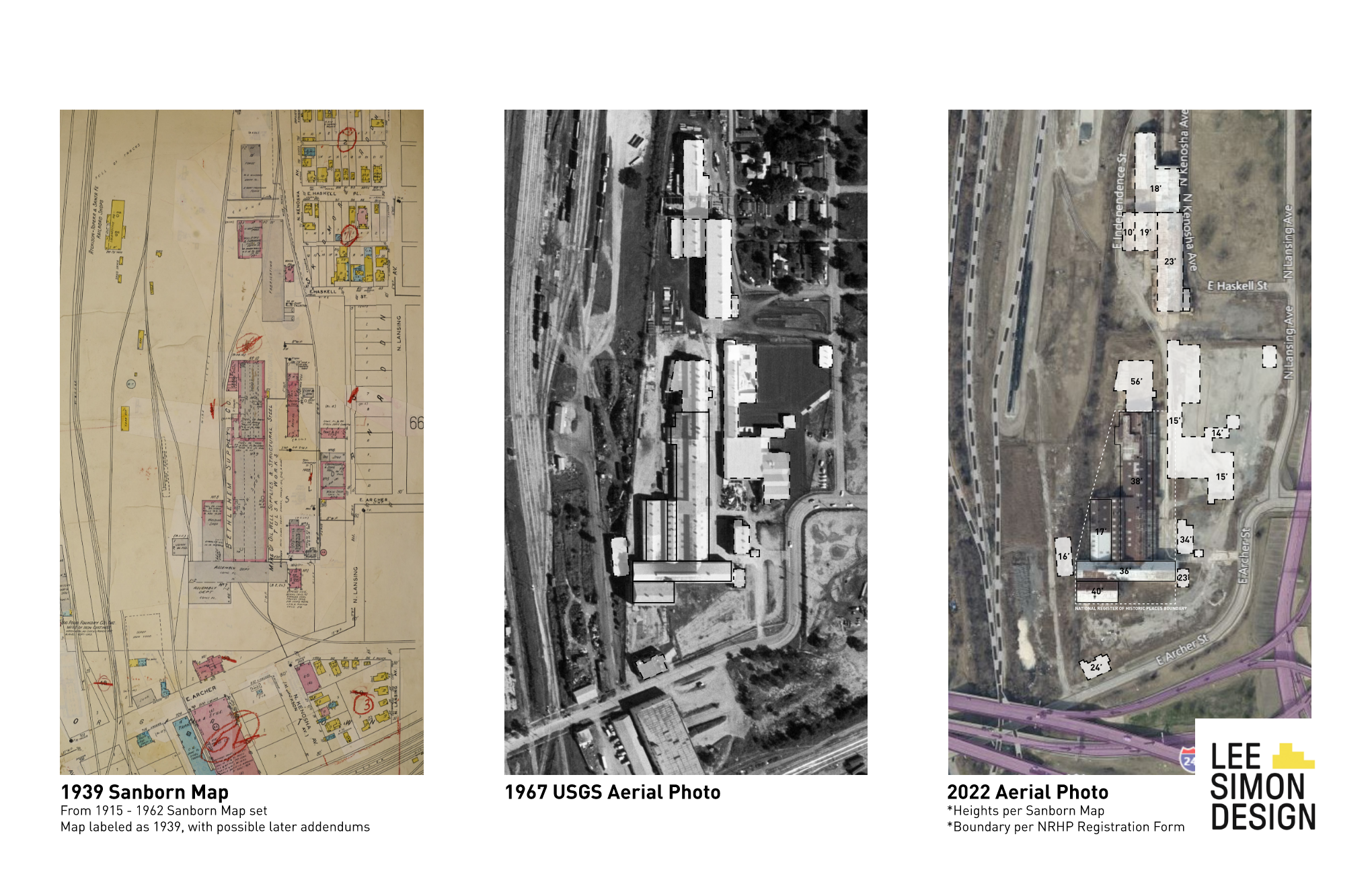
Built in 1911, the Evans Fintube building housed many crucial businesses across its lifetime, most significantly as steel manufacturing companies that played a significant part in the development of the region’s oil production equipment and structural steel for large buildings. The 1921 Tulsa Race Massacre changed the future of Greenwood forever, with many residents killed and large portions of the neighborhood destroyed or seized, while the City of Tulsa changed the area’s zoning code only three days later to prevent the recreation of the Black Community’s highly successful economic center.




A central tenet of this project was to envision this site as if that racist rezoning had never occurred, with Greenwood allowed to continue to grow and thrive as was its trajectory prior to destruction, providing spaces and opportunities that other districts in Tulsa have taken for granted for decades. Revitalizing this significant historical icon was important to the design team, but it was far more necessary to ensure that the many programmatic elements were planned from the beginning to support the residents and community of Greenwood.
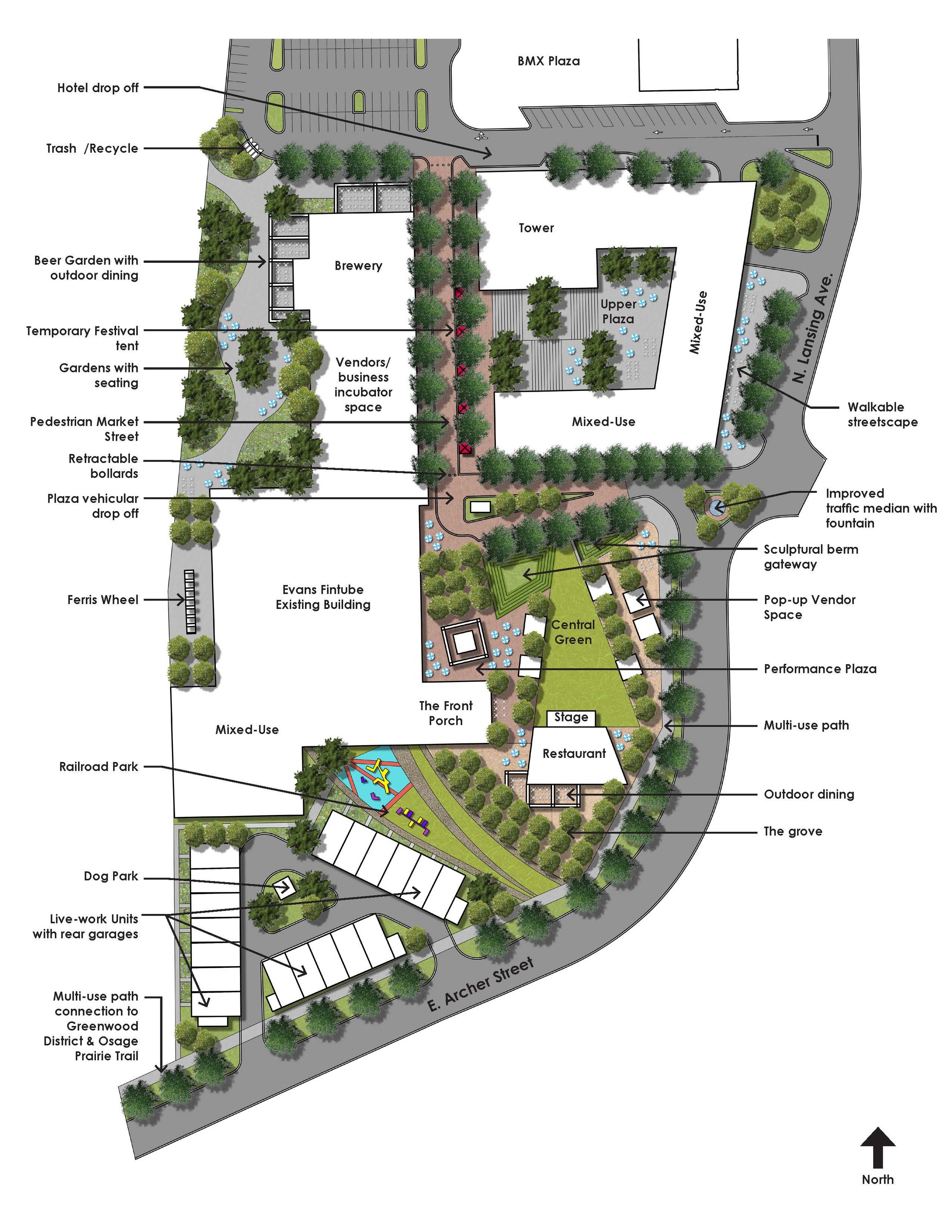
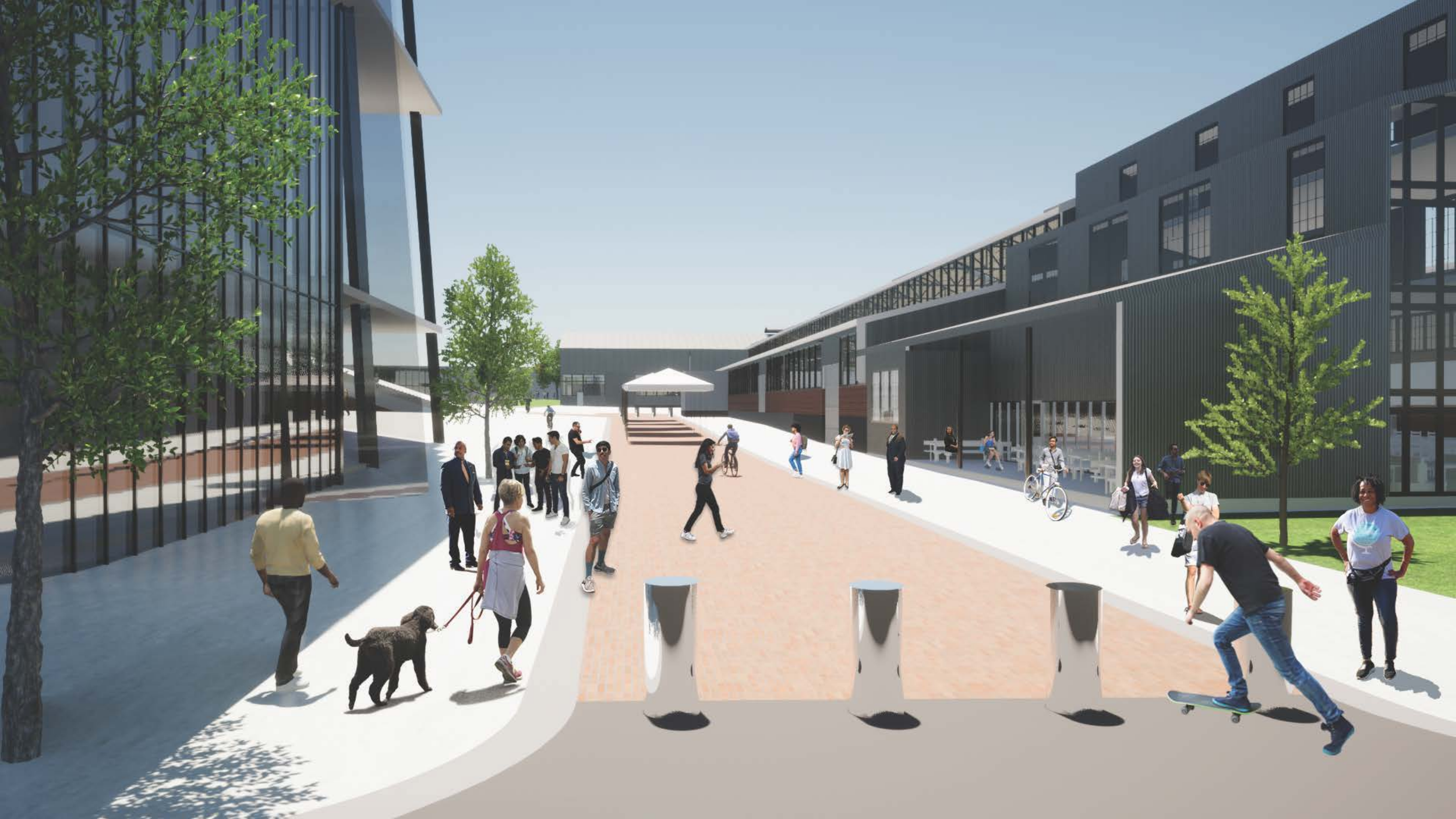
The 22-acre Evans Fintube site, long ago a sprawling industrial complex and major employment and economic center for Historic Greenwood, now only contains the historic Oklahoma Iron Works Building as the last reminder of that legacy. The Iron Works Building was a crucial element in Tulsa’s growth and development, as it was the facility used to manufacture the steel used to construct many of Tulsa’s early skyscrapers. Abandoned for decades and deep in disrepair, the Iron Works Building was proposed to be restored to historic standards as feasible, with new programs including mixed use, local business incubation and vendor space, and a large brewery and food hall. A new set of live-work units were also planned to be constructed at the south end of the property during this initial phase.
A second phase of development on the site would be anchored by The Beacon, a new 42-story mixed-use housing tower at the northeast corner that would have included rooftop dining, a hotel, performance and studio spaces, retail, and mixed-income multifamily housing. A significant community plaza and other new site elements were planned to be constructed during this phase as well, including a variety of parks and community gathering spaces. A pedestrian bridge would connect the site to the heart of the Historic Greenwood neighborhood, creating a convenient access point for residents’ daily use.
Publications:
(Partner Tulsa | Press Release | Tulsa World)